What do you say when it's been too long?
Given the chance, fewer than a third of people messaged an old friend, even when they wanted to. What to say, and why they'll likely be glad you did.
Nick3 min read
I went from talking with a close friend almost every day to not talking with him at all. In the course of a week.
I'll call him Daniel. He was one of my college roommates, and he'd moved here from Korea when he was young. Then he went back for an internship. The last thing we did before he left was stay up all night talking politics.
I think it was partly an excuse to hang out one last time.
I wasn't sure how to keep the friendship alive after that. I'm still not. He's in California now, closer than Korea but across the country. For years, I thought about reaching out all the time. I didn't.
We once talked until the sun came up. Now I've missed years of small stuff, and even a simple "How have you been?" feels like a very large question.
You're not the only one who hasn't sent it
If someone came to mind while you were reading that, you're in good company: in two national surveys of US adults, more than a third had lost touch with a friend in the past year. You're also in good company if you haven't messaged them yet.
In another of their studies, people were more interested in hearing from an old friend than in being the one to reach out. So the person you're thinking of may be hesitating too.
When the researchers asked what held people back, the top reason was not knowing whether the friend would want to hear from them.
They'll probably be glad to hear from you
That worry tends to be unfounded.
An unexpected message to someone you used to be close to means you're probably doubly underestimating. They'll likely be even gladder than you'd guess.
What to say
A first message can be small. However small it needs to be to get over the awkwardness. You don't need to know what the friendship will look like afterward.
You can skip "How have you been?" A few lines will do:
- What made you think of them. Maybe a conversation, or a song that came on. If it's something they did for you, say that too. People tend to underestimate how good that is to hear; there's more on it in What makes a gift meaningful?
- One thing going on with you, if you want. It gives them something to ask about if they write back.
- A way off the hook. For Daniel, I'd end with "No pressure to respond. Just wanted you to know I'm thinking about you." I want him to know he's still in my thoughts, and that I'm here if he needs me. I don't want the message to become an assignment he's already behind on.
Still stuck? Warm up by messaging a friend you already talk to. In one study, that got more people to actually reach out.
After you send it
If they write back, you don't have to cover the missing years all at once. Ask about one thing they tell you, and share a little of your own life back. Follow-up questions do more than people expect: in studies of conversations, people who asked more of them came across as better listeners and were better liked.
If they don't write back, you may never know why. That's okay — give them room. You still told them.
So I finally sent one
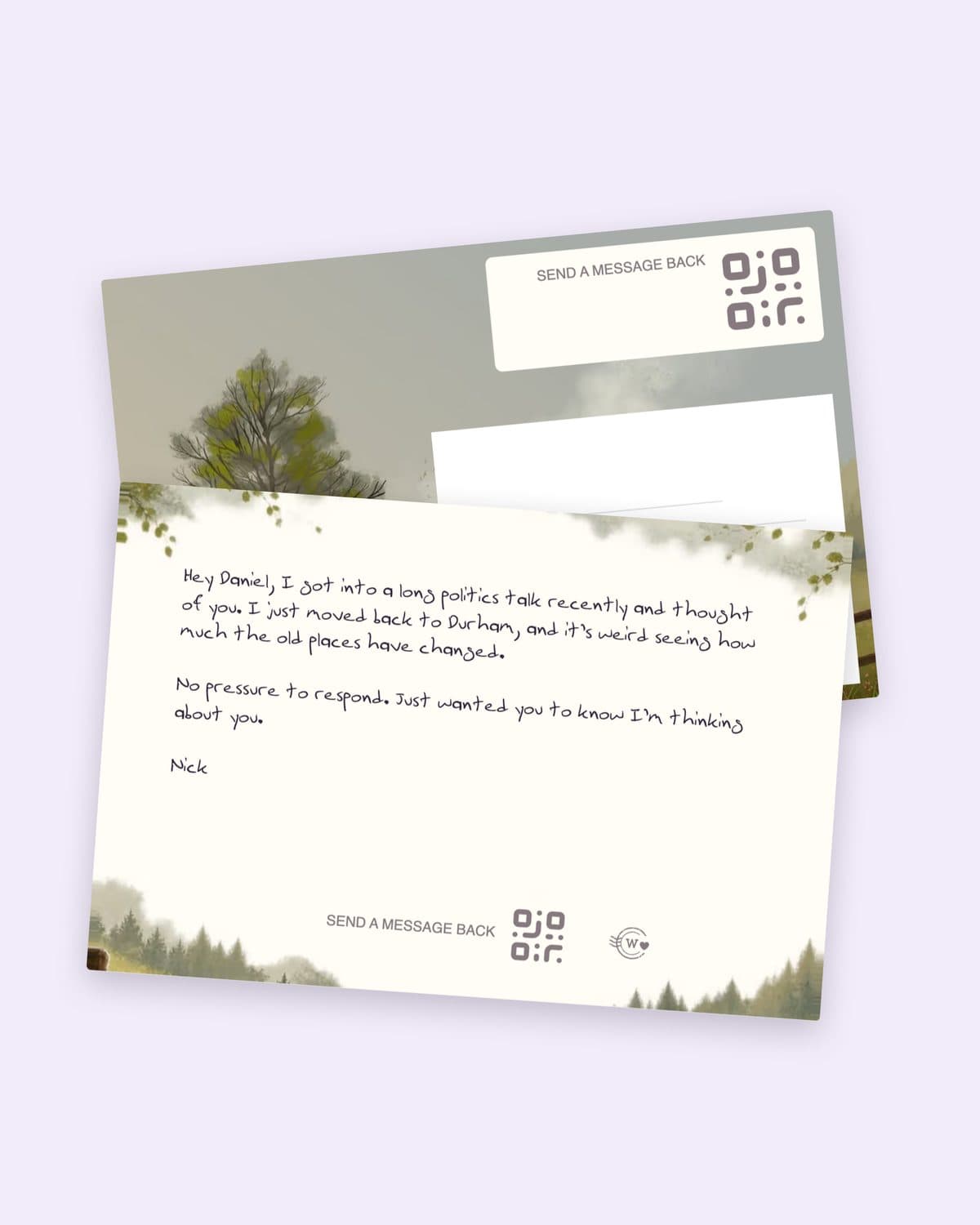
These things don't always come naturally to me, so I kept it to a few lines, on a postcard, where there's no read receipt. Here's what I wrote Daniel:

Hey Daniel, I got into a long politics talk recently and thought of you. I just moved back to Durham, and it's weird seeing how much the old places have changed. No pressure to respond. Just wanted you to know I'm thinking about you. Nick

We built postcards into WithLuv to make this easier. Try it here. Your first one is free:
Say what made you think of them. If you want, add one thing that's going on with you. Then let them off the hook: no pressure to write back.


 Sent withluv